Buy school-tool.com ?
We are moving the project
school-tool.com .
Are you interested in purchasing the domain
school-tool.com ?
domain@kv-gmbh.de · 0541-91531010
Buy school-tool.com ?
Is psychology a pseudoscience?
No, psychology is not a pseudoscience. It is a legitimate scientific field that studies human behavior and mental processes using empirical research methods. Psychology follows the scientific method to develop theories, conduct experiments, and make evidence-based conclusions. While there may be some areas of psychology that are more subjective or difficult to measure, the field as a whole is considered a science. **
Is iridology a pseudoscience?
Iridology is considered a pseudoscience by the scientific community. It is based on the belief that patterns, colors, and other characteristics of the iris can be used to diagnose medical conditions. However, there is no scientific evidence to support the claims made by iridologists, and studies have shown that their diagnoses are not reliable. Therefore, iridology is not considered a legitimate scientific practice. **

Similar search terms for Pseudoscience
Top-Angebote
Products related to Pseudoscience:
-
JoyToys Montessori Wooden Learning Clock Time Teaching Puzzle For Kids Montessori Wooden Learning Clock Time Teaching Puzzle For KidsLearn through play with our wooden learning clock, designed to help children confidently understand time while developing essential early learning skills. This engaging Montessori clock combines handson puzzle play with interactive time practice,...29,97 $*Shipping: 0,00 $Secure redirect to the provider
-
Usborne Beginners Science Series – 10 Book Classroom Set Primary School STEM & Nonfiction Learning Books (Includes Earthquakes & Tsunamis)Inspire curiosity and a love of learning with the Usborne Beginners Science Series – 10 Books Collection Set, created by Usborne. This engaging educational collection introduces young readers to fascinating science topics through clear explanations, vivid illustrations, and easy-to-read text. Covering subjects such as Earthquakes and Tsunamis, nature, space, and the world around us, these books make complex ideas accessible and exciting. Designed for independent readers and classroom use, the Usborne Beginners series supports early STEM learning, reading confidence, and general knowledge development. Why Parents & Teachers Love This Collection: 10 engaging science books for children Covers key topics including Earthquakes & Tsunamis Easy-to-read format ideal for beginners Bright illustrations and simple explanations Perfect for ages 6–10 and early learners A fantastic introduction to science, the Usborne Beginners Collection helps children explore, question, and understand the world around them. Earthquakes and Tsunamis This is a fantastic addition to the popular Beginners series, providing an informative introduction to the fascinating world of earthquakes for young readers. There are clear explanations of the science behind different types of earthquakes and their effects, including tsunamis and landslides. This title features real-life earthquakes, and describes how people are kept safe and rescued when disaster strikes. Striking colour photographs and step-by-step illustrations engage readers with the subject matter. This title is developed with a reading expert from Roehampton University to help young readers grow in confidence. Sun Moon and Stars What is the Sun made of? How did astronauts get to the Moon and what did they find there? For children beginning to read on their own, this book is an exciting introduction to space. Includes vivid, full colour illustrations and photographs on every page, and easy-to-read text specially written with the help of a reading expert Living in Space How do astronauts travel into space? Where do they live when they get there? What do they do all day? In this book you'll find the answers and lots more amazing facts about living in space. This non-fiction series aims to encourage children to access the wonder of the world around them. The easy-to-read text has been specially written with the help of a reading expert Storms and Hurricanes How do astronauts travel into space? Where do they live when they get there? What do they do all day? In this book you'll find the answers and lots more amazing facts about living in space. This non-fiction series aims to encourage children to access the wonder of the world around them. The easy-to-read text has been specially written with the help of a reading expert Volcanoes An introduction to earthquakes and volcanoes. The sensational images combine with lively text, amazing facts, diagrams and a comprehensive glossary Astronomy A straightforward book telling...17,99 £*Shipping: 2,99 £Secure redirect to the provider
-
Scholastic Teaching Resources Sight Word Readers Classroom Box SetJumpstart reading success with this irresistible collection of 125 little books that introduce and reinforce the first 50 must-know sight words! Each set includes a sturdy storage box stocked with 5 copies of 25 delightful tales—each presenting two...101,99 $*Shipping: 0,00 $Secure redirect to the provider
-
Market Central Felt Finger Numbers Math Toy Toddler Counting Early Education Learning Game Felt Finger Numbers Math Toy Toddler Counting Early Education Learning GameThis toddler Montessori felt math toy provides an interactive way for young children to learn basic numbers and early counting skills. Designed to build foundational math skills through handson play, it helps develop early childhood intelligence and...34,97 $*Shipping: 0,00 $Secure redirect to the provider


-
Is raw food considered pseudoscience?
Raw food is not considered pseudoscience, as there is scientific evidence to support the benefits of consuming raw fruits, vegetables, nuts, and seeds. These foods are rich in essential nutrients and enzymes that can be beneficial for overall health. However, it is important to note that a raw food diet may not be suitable for everyone, and it is essential to ensure that the diet is balanced and meets individual nutritional needs. While some claims about the benefits of raw food diets may be exaggerated, the concept itself is not considered pseudoscience. **
-
Do you think that psychotherapies are just pseudoscience?
No, psychotherapies are not pseudoscience. Psychotherapy is a well-established and evidence-based treatment approach that has been shown to be effective for a wide range of mental health conditions. There is a substantial body of research supporting the efficacy of various psychotherapeutic approaches, and many therapists use evidence-based practices to help their clients. While there may be some fringe or unproven therapies that claim to be psychotherapeutic in nature, the field as a whole is grounded in scientific principles and research. **
-
Do you think that psychology is a pseudoscience?
No, psychology is not a pseudoscience. It is a legitimate scientific field that studies human behavior and mental processes using empirical research methods. Psychologists use systematic observation, experimentation, and analysis to understand and explain human behavior, emotions, and cognition. The findings in psychology are based on evidence and are subject to peer review, making it a respected scientific discipline. **
-
Are studies on the 2D:4D ratio pseudoscience?
No, studies on the 2D:4D ratio are not pseudoscience. The 2D:4D ratio is the ratio of the length of the second digit (index finger) to the length of the fourth digit (ring finger), and it has been studied in relation to various aspects of human biology and behavior. While some early claims about the ratio's relationship to traits like aggression and sexual orientation have been controversial, there is ongoing research on its potential links to prenatal hormone exposure and its association with certain health conditions. Therefore, it is a legitimate area of scientific inquiry. **


Is Noetics a pseudoscience or even an outdated, obsolete doctrine?
Noetics is not considered a pseudoscience or an outdated, obsolete doctrine. It is a field of study that explores the relationship between the mind and the physical world, drawing on both scientific and philosophical principles. While some aspects of noetics may be controversial or not widely accepted within the scientific community, it is still an active area of research and inquiry. Noetics continues to be studied and discussed by scholars and researchers in various fields, and its potential implications for understanding consciousness and human experience are still being explored. **
Why are important areas of science excluded and labeled as pseudoscience?
Important areas of science may be excluded and labeled as pseudoscience due to a lack of empirical evidence, rigorous testing, and peer-reviewed research to support their claims. Pseudoscience often relies on anecdotal evidence, untestable hypotheses, and unverifiable claims, which do not meet the standards of scientific inquiry. Additionally, some areas may be labeled as pseudoscience due to their association with fraudulent practices, misinformation, or a lack of consensus within the scientific community. It is important to critically evaluate and distinguish between legitimate scientific fields and pseudoscientific claims to ensure the integrity and credibility of scientific knowledge. **
Top-Angebote
Products related to Pseudoscience:
-
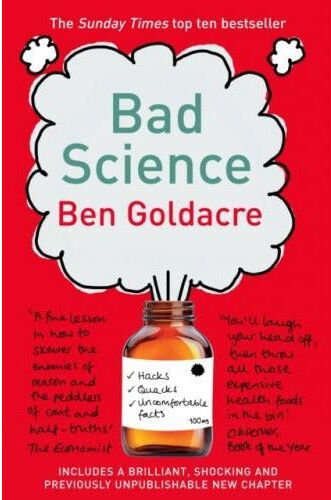
HARPERCOLLINS Bad Science by Ben Goldacre – Bestselling Book Exposing Misleading Health Claims, Media Myths & PseudoscienceBen Goldacre's wise and witty bestseller, shortlisted for the Samuel Johnson Prize, lifts the lid on quack doctors, flaky statistics, scaremongering journalists and evil pharmaceutical corporations. Since 2003 Dr Ben Goldacre has been exposing dodgy medical data in his popular Guardian column. In this eye-opening book he takes on the MMR hoax and misleading cosmetics ads, acupuncture and homeopathy, vitamins and mankind's vexed relationship with all manner of 'toxins'. Along the way, the self-confessed 'Johnny Ball cum Witchfinder General' performs a successful detox on a Barbie doll, sees his dead cat become a certified nutritionist and probes the supposed medical qualifications of 'Dr' Gillian McKeith. Full spleen and satire, Ben Goldacre takes us on a hilarious, invigorating and ultimately alarming journey through the bad science we are fed daily by hacks and quacks.3,99 £*Shipping: 1,99 £Secure redirect to the provider
-
Perfect Picks Market Kids Learning Clock Silent Analog Teaching Wall Clock For Classroom & Bedroom Inch white 8 InchTransform learning into an exciting daily adventure with this Kids learning clock designed to help children master time with confidence. Featuring colorful numbers, clearly marked hands, and an easytoread analog display, it's perfect for young...54,97 $*Shipping: 0,00 $Secure redirect to the provider
-
JoyToys Montessori Wooden Learning Clock Time Teaching Puzzle For Kids Montessori Wooden Learning Clock Time Teaching Puzzle For KidsLearn through play with our wooden learning clock, designed to help children confidently understand time while developing essential early learning skills. This engaging Montessori clock combines handson puzzle play with interactive time practice,...29,97 $*Shipping: 0,00 $Secure redirect to the provider
-
Usborne Beginners Science Series – 10 Book Classroom Set Primary School STEM & Nonfiction Learning Books (Includes Earthquakes & Tsunamis)Inspire curiosity and a love of learning with the Usborne Beginners Science Series – 10 Books Collection Set, created by Usborne. This engaging educational collection introduces young readers to fascinating science topics through clear explanations, vivid illustrations, and easy-to-read text. Covering subjects such as Earthquakes and Tsunamis, nature, space, and the world around us, these books make complex ideas accessible and exciting. Designed for independent readers and classroom use, the Usborne Beginners series supports early STEM learning, reading confidence, and general knowledge development. Why Parents & Teachers Love This Collection: 10 engaging science books for children Covers key topics including Earthquakes & Tsunamis Easy-to-read format ideal for beginners Bright illustrations and simple explanations Perfect for ages 6–10 and early learners A fantastic introduction to science, the Usborne Beginners Collection helps children explore, question, and understand the world around them. Earthquakes and Tsunamis This is a fantastic addition to the popular Beginners series, providing an informative introduction to the fascinating world of earthquakes for young readers. There are clear explanations of the science behind different types of earthquakes and their effects, including tsunamis and landslides. This title features real-life earthquakes, and describes how people are kept safe and rescued when disaster strikes. Striking colour photographs and step-by-step illustrations engage readers with the subject matter. This title is developed with a reading expert from Roehampton University to help young readers grow in confidence. Sun Moon and Stars What is the Sun made of? How did astronauts get to the Moon and what did they find there? For children beginning to read on their own, this book is an exciting introduction to space. Includes vivid, full colour illustrations and photographs on every page, and easy-to-read text specially written with the help of a reading expert Living in Space How do astronauts travel into space? Where do they live when they get there? What do they do all day? In this book you'll find the answers and lots more amazing facts about living in space. This non-fiction series aims to encourage children to access the wonder of the world around them. The easy-to-read text has been specially written with the help of a reading expert Storms and Hurricanes How do astronauts travel into space? Where do they live when they get there? What do they do all day? In this book you'll find the answers and lots more amazing facts about living in space. This non-fiction series aims to encourage children to access the wonder of the world around them. The easy-to-read text has been specially written with the help of a reading expert Volcanoes An introduction to earthquakes and volcanoes. The sensational images combine with lively text, amazing facts, diagrams and a comprehensive glossary Astronomy A straightforward book telling...17,99 £*Shipping: 2,99 £Secure redirect to the provider
-
Is psychology a pseudoscience?
No, psychology is not a pseudoscience. It is a legitimate scientific field that studies human behavior and mental processes using empirical research methods. Psychology follows the scientific method to develop theories, conduct experiments, and make evidence-based conclusions. While there may be some areas of psychology that are more subjective or difficult to measure, the field as a whole is considered a science. **
-
Is iridology a pseudoscience?
Iridology is considered a pseudoscience by the scientific community. It is based on the belief that patterns, colors, and other characteristics of the iris can be used to diagnose medical conditions. However, there is no scientific evidence to support the claims made by iridologists, and studies have shown that their diagnoses are not reliable. Therefore, iridology is not considered a legitimate scientific practice. **
-
Is raw food considered pseudoscience?
Raw food is not considered pseudoscience, as there is scientific evidence to support the benefits of consuming raw fruits, vegetables, nuts, and seeds. These foods are rich in essential nutrients and enzymes that can be beneficial for overall health. However, it is important to note that a raw food diet may not be suitable for everyone, and it is essential to ensure that the diet is balanced and meets individual nutritional needs. While some claims about the benefits of raw food diets may be exaggerated, the concept itself is not considered pseudoscience. **
-
Do you think that psychotherapies are just pseudoscience?
No, psychotherapies are not pseudoscience. Psychotherapy is a well-established and evidence-based treatment approach that has been shown to be effective for a wide range of mental health conditions. There is a substantial body of research supporting the efficacy of various psychotherapeutic approaches, and many therapists use evidence-based practices to help their clients. While there may be some fringe or unproven therapies that claim to be psychotherapeutic in nature, the field as a whole is grounded in scientific principles and research. **
Similar search terms for Pseudoscience
-
Scholastic Teaching Resources Sight Word Readers Classroom Box SetJumpstart reading success with this irresistible collection of 125 little books that introduce and reinforce the first 50 must-know sight words! Each set includes a sturdy storage box stocked with 5 copies of 25 delightful tales—each presenting two...101,99 $*Shipping: 0,00 $Secure redirect to the provider
-
Market Central Felt Finger Numbers Math Toy Toddler Counting Early Education Learning Game Felt Finger Numbers Math Toy Toddler Counting Early Education Learning GameThis toddler Montessori felt math toy provides an interactive way for young children to learn basic numbers and early counting skills. Designed to build foundational math skills through handson play, it helps develop early childhood intelligence and...34,97 $*Shipping: 0,00 $Secure redirect to the provider
-
Tiny Tots Teens Trends Kids Montessori Wooden Clock Toy, Time Learning Teaching Aids, Educational For Children, Primary School Clever Board Toy pinkIntroducing the Kids Montessori Wooden Clock Toy, a perfect educational tool that teaches children how to understand time while developing essential motor skills. This beautifully crafted clock toy is made from natural and sustainable solid wood,...29,97 $*Shipping: 0,00 $Secure redirect to the provider
-
Perfect Picks Market Kids Learning Clock Silent Analog Teaching Wall Clock For Classroom & Bedroom Inch white 10 InchTransform learning into an exciting daily adventure with this Kids learning clock designed to help children master time with confidence. Featuring colorful numbers, clearly marked hands, and an easytoread analog display, it's perfect for young...69,97 $*Shipping: 0,00 $Secure redirect to the provider
-
Do you think that psychology is a pseudoscience?
No, psychology is not a pseudoscience. It is a legitimate scientific field that studies human behavior and mental processes using empirical research methods. Psychologists use systematic observation, experimentation, and analysis to understand and explain human behavior, emotions, and cognition. The findings in psychology are based on evidence and are subject to peer review, making it a respected scientific discipline. **
-
Are studies on the 2D:4D ratio pseudoscience?
No, studies on the 2D:4D ratio are not pseudoscience. The 2D:4D ratio is the ratio of the length of the second digit (index finger) to the length of the fourth digit (ring finger), and it has been studied in relation to various aspects of human biology and behavior. While some early claims about the ratio's relationship to traits like aggression and sexual orientation have been controversial, there is ongoing research on its potential links to prenatal hormone exposure and its association with certain health conditions. Therefore, it is a legitimate area of scientific inquiry. **
-
Is Noetics a pseudoscience or even an outdated, obsolete doctrine?
Noetics is not considered a pseudoscience or an outdated, obsolete doctrine. It is a field of study that explores the relationship between the mind and the physical world, drawing on both scientific and philosophical principles. While some aspects of noetics may be controversial or not widely accepted within the scientific community, it is still an active area of research and inquiry. Noetics continues to be studied and discussed by scholars and researchers in various fields, and its potential implications for understanding consciousness and human experience are still being explored. **
-
Why are important areas of science excluded and labeled as pseudoscience?
Important areas of science may be excluded and labeled as pseudoscience due to a lack of empirical evidence, rigorous testing, and peer-reviewed research to support their claims. Pseudoscience often relies on anecdotal evidence, untestable hypotheses, and unverifiable claims, which do not meet the standards of scientific inquiry. Additionally, some areas may be labeled as pseudoscience due to their association with fraudulent practices, misinformation, or a lack of consensus within the scientific community. It is important to critically evaluate and distinguish between legitimate scientific fields and pseudoscientific claims to ensure the integrity and credibility of scientific knowledge. **
* All prices are inclusive of VAT and, if applicable, plus shipping costs. The offer information is based on the details provided by the respective shop and is updated through automated processes. Real-time updates do not occur, so deviations can occur in individual cases. ** Note: Parts of this content were created by AI.